A lot of the research that's been done on mental health relies on self-report: Young people are asked to guesstimate how many hours they had on different platforms over weeks or months. They're also asked to estimate the impact of that screen use on their social relationships, their sleep, their exercise, their patterns. If you asked me, "John, what was your screen time for the last two weeks and what were your sleep patterns?," I wouldn't know.
Over the past year, I started practicing breathwork to help with my mental health. Slowing my breath and breathing deep into my diaphragm has helped bring me calm and perspective, and longer sessions have helped me work through negative thought patterns. Breathwork, I have found, is an important adjunct to other components of a healthy life, such as nutrition, physical exercise, sleep, and social connection.
The Washington Post analyzed TikTok usage, finding what topics the algorithm nudges users towards more: TikTok's algorithm favors mental health content over many other topics, including politics, cats and Taylor Swift, according to a Washington Post analysis of nearly 900 U.S. TikTok users who shared their viewing histories. The analysis found that mental health content is stickier than many other videos: It's easier to spawn more of it after watching with a video, and harder to get it out of your feed afterward.
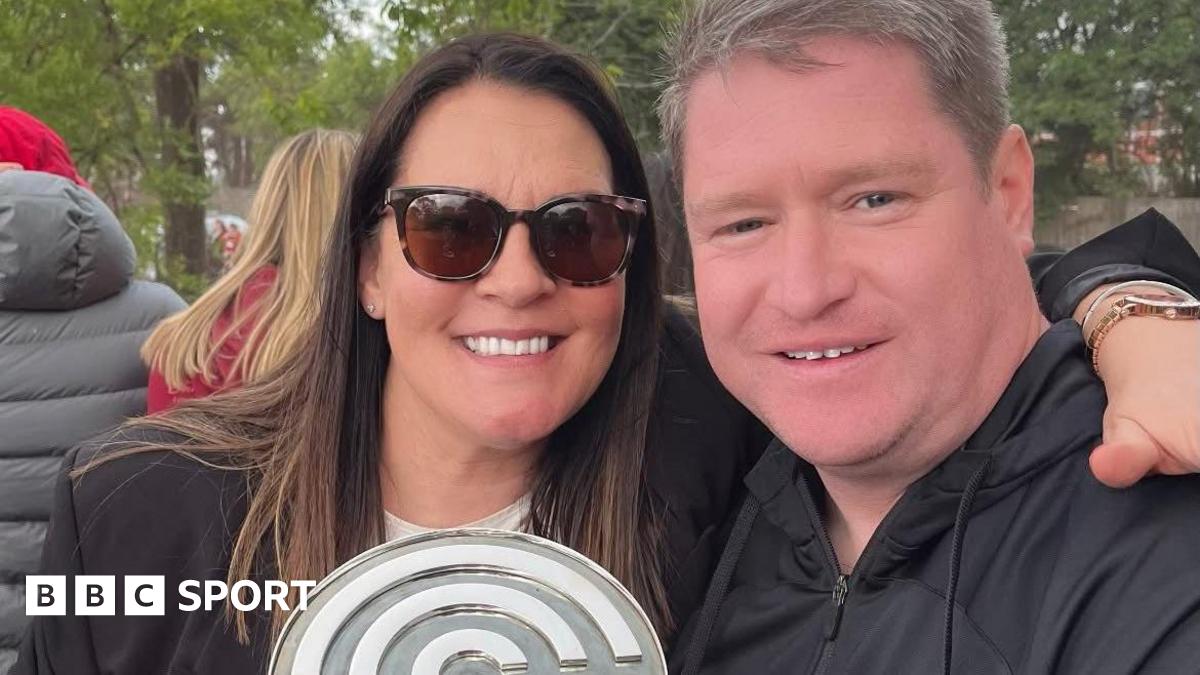
On the surface, Omar Bogle's career is that of your typical EFL striker. The Crewe Alexandra forward has played in every division from the Championship down to the National League North, scoring well over 150 goals across all competitions. Bogle's CV includes the highs of promotion to League Two and the Premier League, with Grimsby Town and Cardiff City respectively, as well as 2018/19 EFL Trophy glory with Portsmouth, but those on-pitch achievements have been put into perspective in the past 18 months.
Do you ever repeat affirmations to yourself, maybe while looking in the mirror or driving in your car? It feels weirdly powerful, especially when you say them out loud. And the ThinkUp app wants you to harness that power. Instead of listening to pre-recorded mantras from a stranger, you get to record your own very specific affirmations and play them whenever you like. The goal? To boost your mood, feel more self-assured, and maybe even manifest a few dreams.
From reproductive rights to climate change to Big Tech, The Independent is on the ground when the story is developing. Whether it's investigating the financials of Elon Musk's pro-Trump PAC or producing our latest documentary, 'The A Word', which shines a light on the American women fighting for reproductive rights, we know how important it is to parse out the facts from the messaging.
Chris ran a jewellery business which Ruth had also worked in. He had no previous mental health issues but as the company struggled during the Covid pandemic, eventually closing in April 2022, he began to experience delusional thoughts. He became increasingly paranoid, wrongly believing he was being listened to by his phone and computer, and terrified someone was out to get him. He became withdrawn, looked noticeably frailer and experienced suicidal thoughts.
In January, gay comedian Rosie O'Donnell pulled up stakes and moved to Ireland. She was looking to escape the mental jail in which Donald Trump locked her during his first term in office, and where he threatened to put her again in his second, along with deporting her. Now she says she's loving her life in a Georgian farmhouse near Dublin, the Washington Post reports, enjoying walks around town like a civilian,
The 39-year-old victim was stabbed in one of the store's bathrooms while she was changing her 10-month-old daughter's diaper, according to police. When officers responded to a 911 call at around 3 p.m., they found the woman with multiple stab wounds to her back and a laceration on her arm, the Globe reported. The victim's husband was standing outside the bathroom and waiting for her with their other two children, police told CBS News.
I was so panicked by the grief I might experience if my loved one died that it prevented me from giving my loved one what I needed [to]," says Lambert, 54, who lives in London. That was back in 2017. Over time, through trial and error, Lambert says, she learned she had to put her own feelings aside in the moment and focus on the person in front of her.
When Violet and I finally decided to get married, I was in the middle of a depression so deep it had developed into something more like psychosis. I felt like I was pretending to be myself. I don't mean I was playing "the role" of the husband-to-be, the good son, the whatever. I mean I was going around thinking, What would I do right now if I were Malcolm?
Ten years ago, I connected with Christi, a daughter I fathered with a woman I was in a relationship with for a short time decades ago. We split before I knew my girlfriend was pregnant. She didn't tell me until after the baby was born. By that time, she was married to a man Christi knew as her dad. Christi no longer acknowledges him as her father.
Jennings's article focused on people using TikTok gain a more in-depth knowledge of ADHD. "Arguably no part of mental health TikTok is as omnipresent or as fraught as ADHD TikTok," Jennings wrote - and addressed one of the biggest challenges that arose from its prominence, namely: at what point does getting advice from an app overtake getting actual medical advice?
When you stop to consider all that parents are juggling, it actually isn't so surprising anymore. There are kids' weekend and after-school schedules, spirit weeks (yet again) at their school, homework to manage, sports practices, dance events, band lessons, in addition to trying to also somewhat manage an adult life that also likely consists of work, responsibilities, relationships, plus physical health, and parental mental health needs.
Like so many technological and cultural innovations, video games went through a phase of being blamed for all manner of society's ills as they became more popular. But as all but the most committed opponents gave up on the idea that video games might cause violence, a possibly more productive question has emerged - in what ways might playing games actually be good for us?
OpenAI and its largest financial backer, Microsoft, have been sued in California state court over claims that ChatGPT, OpenAI's popular chatbot, encouraged a man with mental illnesses to kill his mother and himself. The lawsuit, filed on Thursday, said that ChatGPT fuelled 56-year-old Stein-Erik Soelberg's delusions of a vast conspiracy against him, and eventually led him to murder his 83-year-old mother, Suzanne Adams, in Connecticut in August.
He resumed this theme in his "Parting Prescription for America," in January 2025, shortly before his term ended. As he emphasizes, and as we've noted previously, social connection has important effects on mental and physical health both through its objective dimensions-the number of relationships and communities, the time we spend with them, and the material supports they offer-and through the subjective sense of connection and belonging, of being loved and cared for.
"What makes it harder or easier to get a good night's sleep at school?" "What are your creative solutions for finding food that feels nourishing on campus?" (for non-athletes) "What were your favorite ways to get movement into your busy schedule?" (for athletes) "What was the best part of being on the team? How do you feel it impacted your physical health?"
Throughout these conversations, ChatGPT reinforced a single, dangerous message: Stein-Erik could trust no one in his life - except ChatGPT itself. It fostered his emotional dependence while systematically painting the people around him as enemies. It told him his mother was surveilling him. It told him delivery drivers, retail employees, police officers, and even friends were agents working against him. It told him that names on soda cans were threats from his 'adversary circle.'
Kaiser declined several requests for an interview, but said in a statement that AI tools don't make medical decisions or replace human care. Rather, they hold "significant potential to benefit health care by supporting better diagnostics, enhancing patient-clinician relationships, optimizing clinicians' time, and ensuring fairness in care experiences and health outcomes by addressing individual needs."
But under the terms of his Imprisonment for Public Protection (IPP) sentence, he was repeatedly denied his freedom - at times because the despair of not having a release date had left his mental health on a knife edge. The only glimpse of the outside world he had seen - a series of day releases in the months before his death - had been snatched away weeks earlier after a prison officer had briefly lost sight of him in a busy shopping centre.
Since OpenAI launched ChatGPT in November 2022, generative artificial intelligence (AI) has taken over Google search results, transformed how we see em-dashes, run rampant on human mental health, and even led to new vocabulary with "AI slop," a term coined to describe meaningless content byproduct. The main entities excited about AI seem to be, by far, tech companies and CEOs. However, plenty of people are already sick of generative AI and the way it's wormed its way into our lives.
One moment we were shaking the sand out of our sandals, the next we found ourselves carving the Thanksgiving turkey. While it's a fun and festive season, it can also be a time of heightened stress for many people. The busyness and non-stop pace can run us ragged-between decorating our homes, entertaining, attending countless work parties, and managing the hectic holiday shopping. The pressure to find the "perfect" gift for our friends and family can be downright grueling.
Using the chosen names and pronouns of LGBTQ+ youth isn't just respectful - it's life-saving. Transgender and nonbinary youth (ages 13 to 24) whose pronouns are respected were 31 percent less likely to attempt suicide in the past year than those whose pronouns are not respected, according to a new report from The Trevor Project. Nearly one-fourth (23 percent) of those who said none of the people they know use their correct name and pronouns also said they have attempted suicide in the past year,
For some parents, social media sucks up their children's time and steals them away from family life, instilling mental health issues along the way. For others, it provides their children with an essential line to friends, family, connection and support. When Australia's social media ban came into effect on Wednesday, millions of under-16s lost access to their accounts and were prevented from creating new ones.
The Online Nation report found on average, people in the UK spent four hours and 30 minutes online every day in 2025 - 31 minutes longer than in 2021. Psychologist Dr Aric Sigman told the BBC this was not a problem in itself, but what mattered was "what this time is displacing and how this may harm mental health". He added the "good news" was society was "beginning to question online time more critically".
Grammy-nominated gospel singer Jubilant Sykes was stabbed to death in his Santa Monica home late Sunday, and his son was taken into custody at the scene, police said. The 71-year-old victim, a prominent singer as well as an actor, was pronounced dead shortly after police arrived at the residence, according to Santa Monica Police Lt. Lewis Gilmore. There, they also discovered his son, 31-year-old Micah Sykes, still inside the Delaware Avenue home. He was booked on suspicion of homicide.
This loneliness epidemic isn't another headline we can shrug off - it's a direct threat to our fundamental need to belong, which is hardwired into us for survival. For nearly 300,000 years, the human species survived in tight-knit tribes - small groups where people had each other's backs. Being cast out wasn't awkward; it was a death sentence. Those exact same associations remain in our brains today: Disconnection = danger. Belonging = safety. So, when we lose meaningful connection, our bodies respond as if something is terribly wrong. Stress rises, well-being declines, and both mental and physical health suffer.